Rethinking fertiliser in estate operations
From Cost Centre to Profit Lever: Rethinking Fertiliser in Agricultural Operations
Your fertilizer bill is higher than it needs to be… simply because nutrients are being wasted on-site.
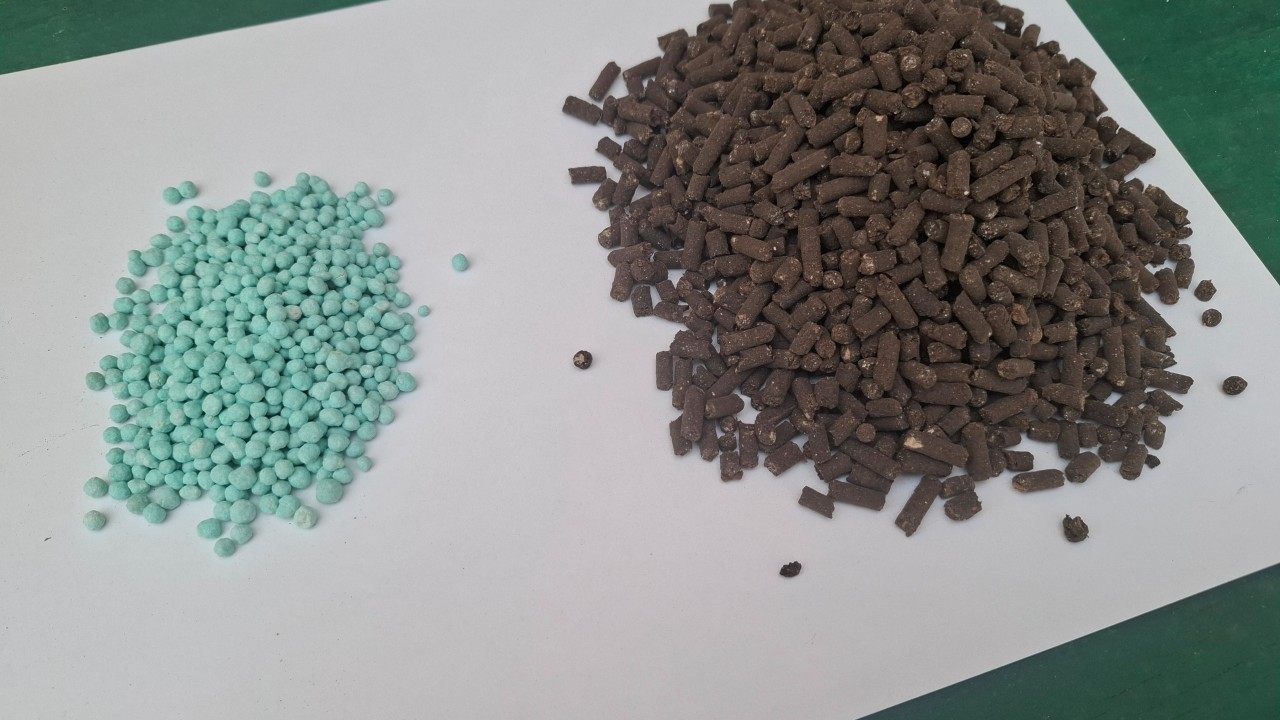
On the left: mineral NPK fertilizer (12-12-17). On the right: organic fertilizer derived from anaerobic digester sludge.
At first glance, the mineral fertilizer looks far more efficient:
Higher nutrient concentration
Easier to transport Precisely formulated
But this comparison is misleading, both the measured amounts of NPK fertilizer and the organic fertilizer provide an equal quantity of nutrients.
🌱 The reality on agricultural estates Crops are not just nitrogen-driven. They require:
Significant phosphorus (P) for flowering and root development
High potassium (K) for yield and product quality
At typical production levels, nutrient demand is often skewed toward potassium, with meaningful phosphorus requirements.
That’s why agricultural estates apply 1.1 to 1.7 tonnes per hectare per year of balanced NPK.
💰 What does that actually cost? Using international benchmark pricing (unsubsidised, delivered to plantation):
€1,300–1,500 per tonne of NPK
That equates to:
€1,500–2,600 per hectare per year spent purely on mineral fertilizer.
A direct operating cost—visible on every balance sheet.
♻️ Now look at what’s happening on-site Facilities with anaerobic digestion systems are already producing nutrient- rich digestate.
But in many cases:
It sits in sludge ponds Nutrients degrade, leach, or volatilise It is not systematically returned to the field
In other words:
The business is buying fertilizer while simultaneously wasting nutrients it already produces.
📊 What is the real value of digestate? Based on realistic production volumes from a typical digester, and assuming only basic sludge processing and recovery, digestate sludge solids can offset approximately:
~5–10% of total NPK requirements
In practice, this translates to:
€150–300 per hectare per year in avoided fertilizer purchases.
More advanced sludge processing and nutrient recovery systems can substantially increase this contribution further.
🏭 Scale matters For a 5,000 hectare agricultural operation this translates into:
€0.75M – €1.5M per year
of avoided cost.
🧠 The takeaway Digestate is not a waste stream. It’s a nutrient asset.
And when it’s not used:
Fertilizer stops being just a cost centre— and becomes a missed profit opportunity.
If you're operating anaerobic digestion systems and not capturing this value, it is time to rethink your nutrient strategy.
Lets discuss how your anaerobic digester can be retrofitted to produce pelletized organic fertilizer.
Comments
No comments yet.