Agronomic crop trials
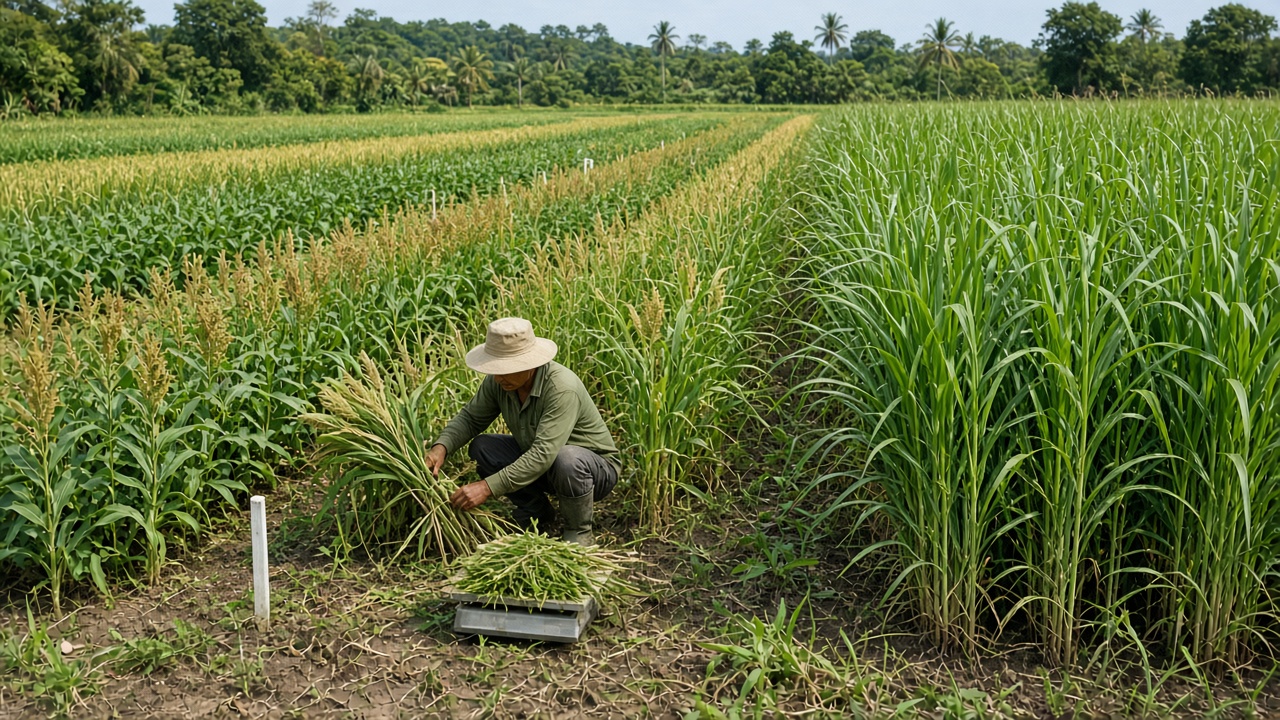
An agronomic trial measures the biomass an energy crop actually yields on a stated site. Sorghum and Napier grass are the usual crops. The number a plant is sized on has to be that yield, not a figure taken from the literature. Published yields are often the maximum, grown with favourable fertiliser, rainfall, and temperature. On a real site any one of those can be less, and the harvested tonnes fall with them. A digester, a boiler, or a bio-LNG plant designed on the maximum will be short of feedstock.
The trial is laid out on the site in question. Fertiliser rate, rainfall, and temperature are recorded with the harvest, so the yield can be read against the conditions that produced it, not against a textbook season. The result is a site yield. It is not a promise that the next year will match it, and it is not a substitute for a feedstock assessment of residues that are already there. A biofertiliser assessment can be run in parallel, on the same site and the same visits. It is a separate scope: the material applied, not the yield.
The work is managed rather than staffed full time in the field. The plots, the cuts, and the weighing can be run by site staff. The management is about one day a week: the protocol, the records, and the yield that is allowed into the design. The field work has been run directly in the past. No agronomic qualification is claimed beyond that practice.