Membrane upgrading
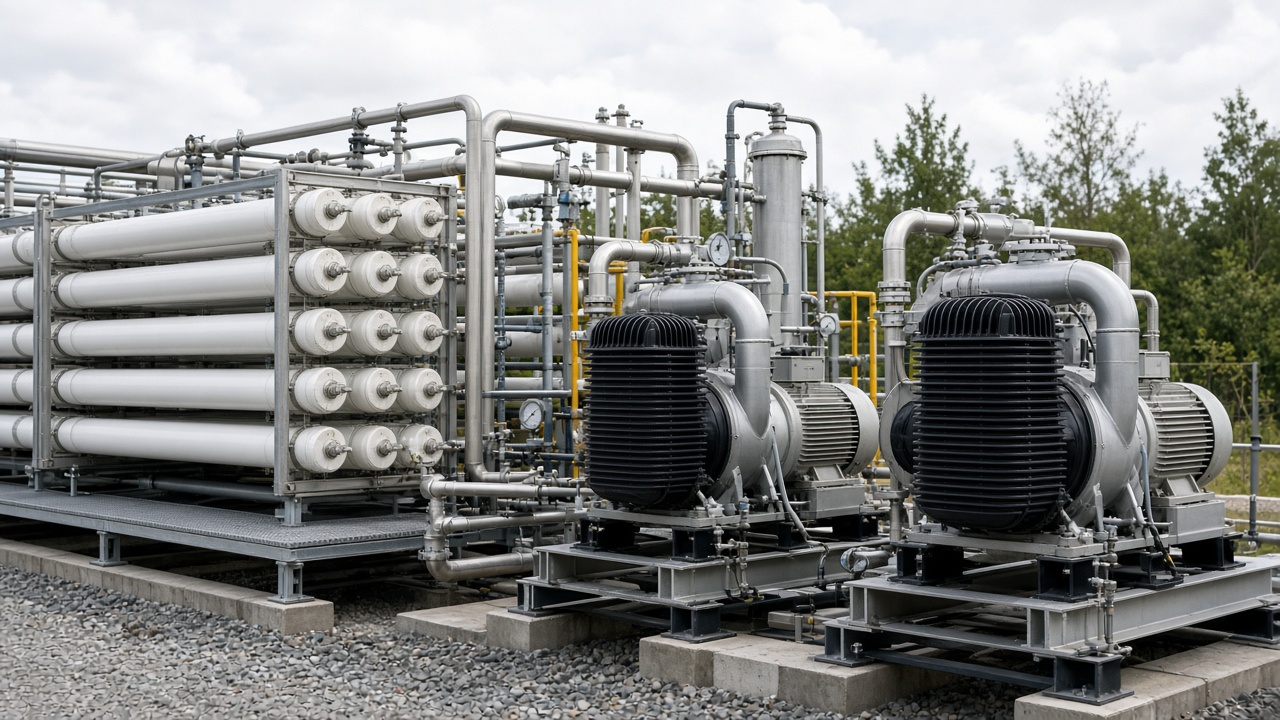
Membrane upgrading separates carbon dioxide from methane by pushing the biogas through selective membranes. The gas has to be compressed to do that. Compression is what makes the process energy intensive: the electricity is consumed for every hour the train runs, not once at startup. The site supply, whether solar and battery or other generation, has to be sized for that load.
Hydrogen sulfide is removed before the membranes. The methane-rich gas is the feed for network injection, for compression as bio-CNG, or for liquefaction. A cascade, which stops at 65 percent methane, does not take this role. An amine scrubber reaches a rich gas without that compression duty. Hydrogen biomethanisation raises the methane by converting the carbon dioxide instead of separating it.
See biomethane upgrading.