Automation
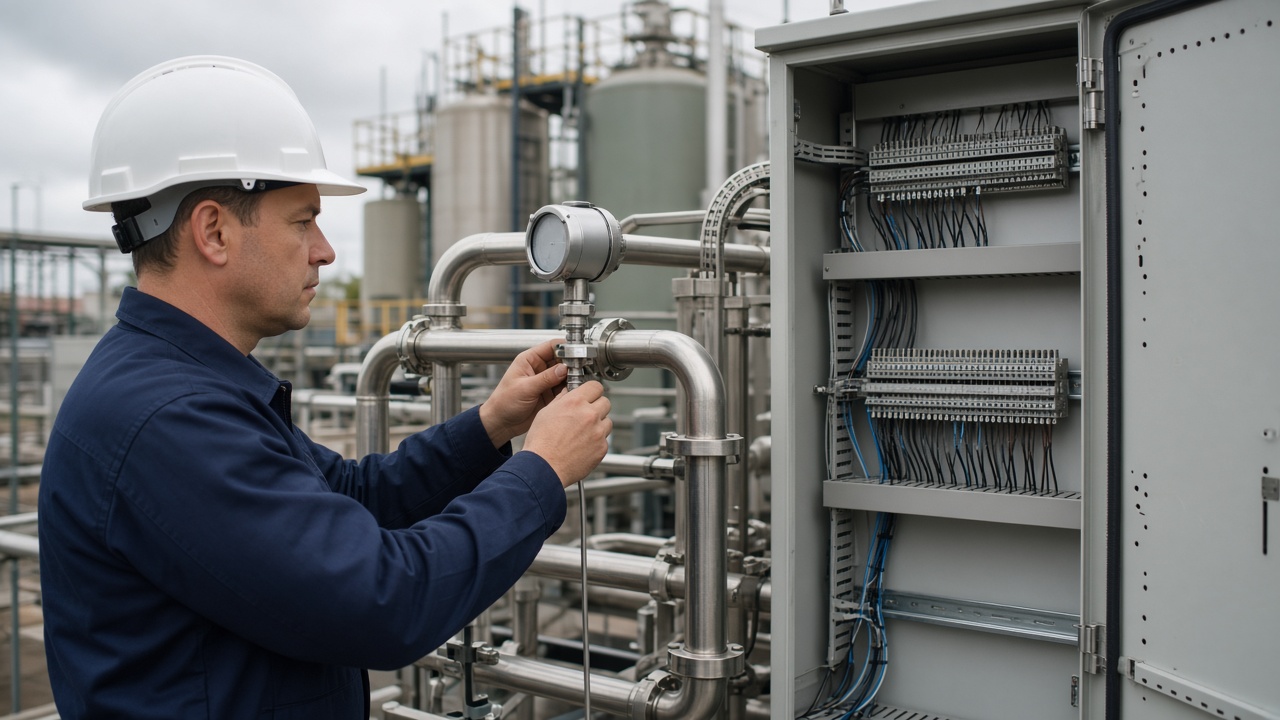
Design, installation, and commissioning of the instruments, the programmable logic controller, and the SCADA for the plant being built. The three are one job. A cause-and-effect list that was never installed, or a cabinet that was never loop-checked, is not a control system. See automation for what the system has to do on a digestion, gas, hydrogen, or steam plant.
Design starts from the process. The instrument list names every measurement the sequences and the trips need: the range, the process connection, the hazardous-area rating, and what the plant does when that measurement fails. The cause-and-effect matrix then says what each trip does — which valve moves, which machine stops, which alarm is raised, and which state a person has to reset. Controller inputs and outputs, the cabinet layout, and the network between process areas follow that matrix. SCADA screens, alarm priorities, and the historian are drawn at the same time, so the operator is not handed a dump of tag names. This sits inside detailed design. Leaving it until the pipe is already up produces nozzles that do not match the instrument and trips that were never in the process design.
Installation is the instrument on the tank or the pipe, the impulse line, the cable, the junction box, the earthing, and the cabinets. Hazardous-area glands, and keeping signal cable away from power cable, are part of that work. Construction supervision checks that what was installed is what the instrument list named, including the spare cores and the labels a later technician will need.
Commissioning of the automation comes before the process is asked to make gas or steam. Each loop is checked from the sensor to the number on the screen, including the failure: a broken wire has to show as a fault, not as a calm zero. Each line of the cause-and-effect matrix is forced and watched while the plant is still safe for that test. Sequences are run dry, then on water or inert gas, then on the real feedstock. Only then does plant commissioning — seeding, first gas, first steam — have numbers it can trust. The handover is the as-built instrument list, the matrix that was actually tested, and the alarm list the shift will live with. Operator training uses those screens, so the people who remain after the commissioning team leaves can tell a normal trend from a trip.