Project and contract management
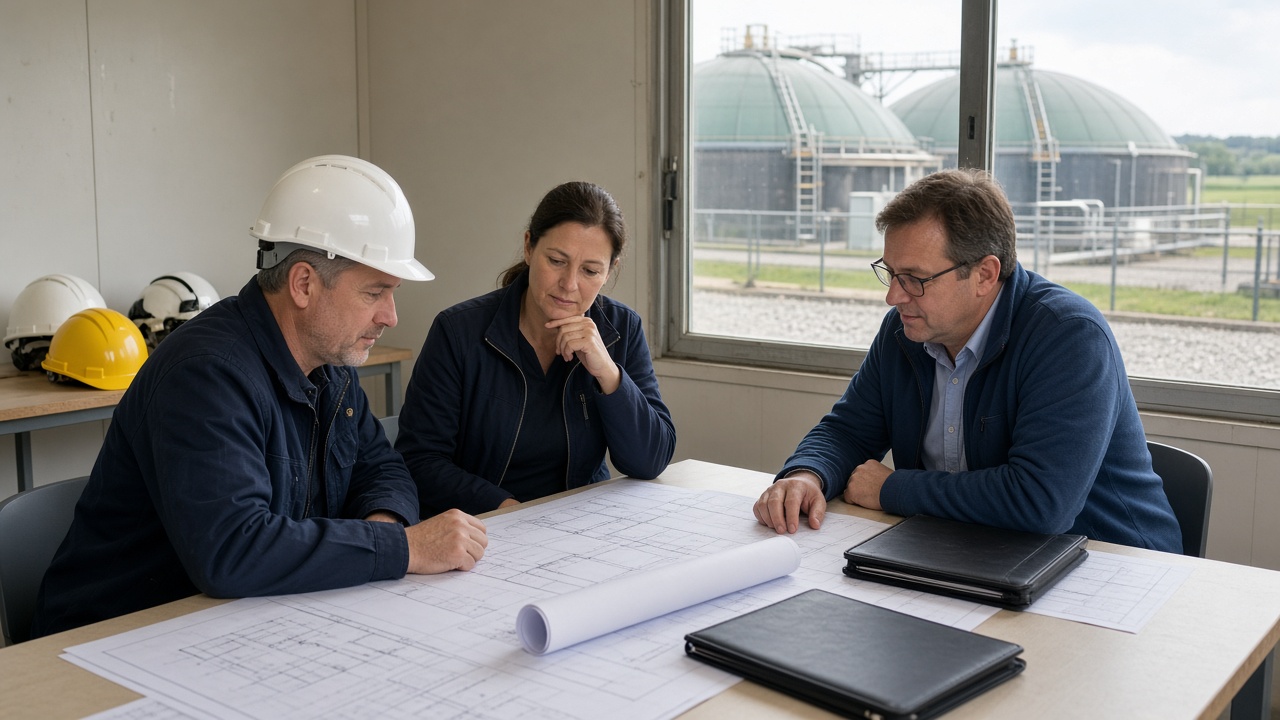
Project management is the owner's control of the job from the decision to build through to handover. It holds the scope, the programme, the cost, and the commercial interfaces, so that a digester, an upgrading train, a genset, or a solar supply is one plant rather than a set of packages that meet on site by accident. On a large plant the design interfaces themselves are design management. It is not the contractor's own project manager, and it is not construction supervision. Supervision records what was built. This work decides what is allowed to proceed, what is late, and what has changed.
The programme runs from feasibility and FEED through detailed design, procurement, construction, commissioning, and handover. A biological plant has a start-up that is not a mechanical date: the engine or the membrane train cannot be declared finished because the steel is up. The programme keeps mechanical completion, first gas, and stable operation as separate milestones. Cost is reported against that same split, including variations, so a change in feedstock or in a trip list is visible before it is a dispute.
Contract management is the administration of the agreements that bind that programme. On these projects that is usually more than one contract: a construction package or several packages, a feedstock supply, an offtake, a grid connection, and the supply of long-lead equipment such as a genset, membranes, or a boiler. The work is the notices, the scope, the variations, the payment against the milestone that was actually reached, and the record of what each party still owes. "Done" is written in the contract. Mechanical completion, commissioning, and a performance period are not the same event, and a payment certificate does not treat them as one.
The form of contract is the one the project uses. The service does not replace the owner's lawyer, and it does not claim a qualification in any particular contract form. It keeps the technical obligations — drawings, cause-and-effect, gas quality, export of power — aligned with the commercial ones, so a variation in the design or the automation is a variation in the contract as well.